Our Teaching
The Deakin Experience: Preparing Responsible Graduates for Impact
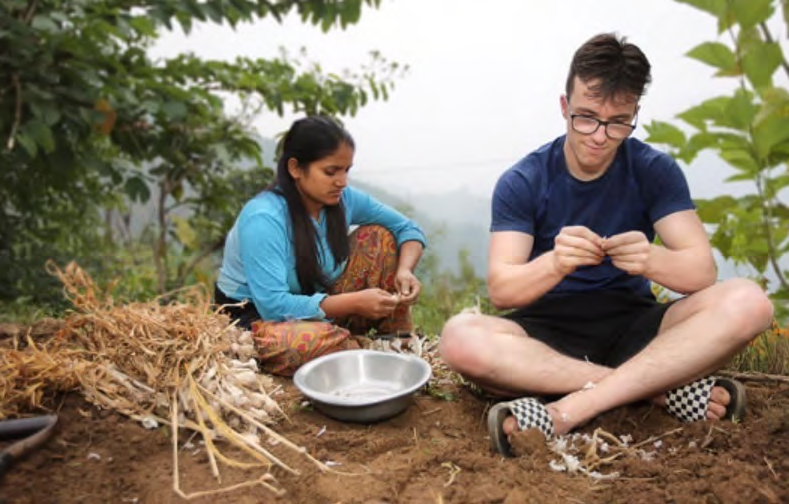
At Deakin Business School, we recognise that responsible management education extends beyond the classroom. The Deakin experience is designed to equip students with the knowledge, skills, values, and practical experiences needed to thrive in an increasingly complex and sustainability-focused global environment.
As Victoria’s leading university for graduate employment and course satisfaction, Deakin provides students with an educational experience that combines academic excellence with real-world application. Through industry-integrated learning, work placements, and strong partnerships with business and community organisations, students are able to apply their learning to authentic challenges and develop the capabilities required to create positive social, environmental, and economic impact.
Our student experience is underpinned by a strong commitment to inclusion, wellbeing, and student success. Students are supported through a range of academic, professional, and wellbeing services that enable them to realise their potential and engage meaningfully with their studies and future careers. These support systems reflect our belief that responsible leadership begins with creating environments where all learners can thrive.
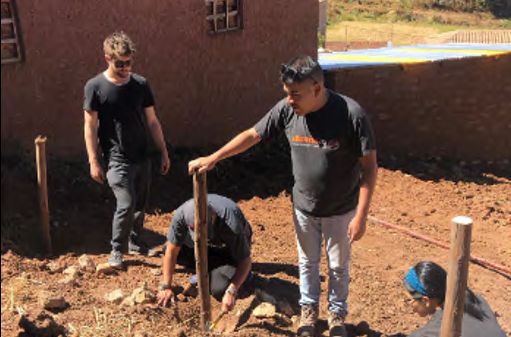
The Deakin experience is further enriched by world-class research, international learning opportunities, and access to global networks. Students are encouraged to engage with diverse perspectives, develop intercultural competencies, and understand the interconnected nature of contemporary challenges, including those reflected in the SDGs. Through overseas study opportunities, multidisciplinary learning experiences, and exposure to cutting-edge research, students develop a broader understanding of their role as global citizens and future leaders.
Importantly, employability at Deakin is not viewed solely through the lens of securing employment. Rather, we seek to prepare graduates who can contribute responsibly to organisations and society. By combining practical experience, ethical awareness, sustainability literacy, and industry engagement, the Deakin experience helps develop graduates who are career-ready, socially conscious, and equipped to address the challenges and opportunities of a rapidly changing world.
This holistic approach exemplifies DBS’s commitment to producing graduates who are not only successful professionals but also responsible leaders capable of contributing to a more sustainable, inclusive, and prosperous future.
Embedding Sustainability and Responsible Leadership
At DBS, sustainability and responsible management are embedded throughout the student learning experience rather than being confined to standalone subjects. Guided by the UN PRME and the SDGs, we systematically integrate sustainability across our undergraduate and postgraduate curricula to equip graduates with the knowledge, skills, and values needed to address complex global challenges. This commitment is reinforced through our new strategic priorities, which weave four key strategic themes throughout all courses: SDGs and Sustainability, AI and Digital Transformation, Bridging Asia, and Employability reflecting the capabilities needed for responsible leadership in a rapidly changing global environment.
Our approach to embed SDGs across our curriculum is both strategic and evidence-based. Students progress through a three-stage developmental framework, moving from awareness (Exposed) to active engagement (Engaged) and ultimately to demonstrated competency (Evidenced) through assessed learning outcomes. This framework is supported by comprehensive SDG mapping across our Bachelor of Commerce, Bachelor of Business and other major UG programs, using a combination of bottom-up input from Unit Chairs and top-down strategic review by the senior leadership and PRME Director. This dual approach ensures curriculum authenticity, transparency, and continuous improvement.
Our commitment extends beyond curriculum design. Through participation in initiatives such as the PRME Pedagogy Series run by PRME Secretariat, DBS academics continuously enhance their capability to embed sustainability, ethics, and responsible leadership into teaching practice. Together, these efforts demonstrate our commitment to developing graduates who are ethically aware, globally minded, and capable of creating positive social, environmental, and economic impact. Sustainability at DBS is not simply a topic of study; it is a core lens through which future business leaders learn to navigate and shape a more sustainable and inclusive world.
Examples of Sustainability embedded within Units
Undergraduate Unit shared across Bachelor of Commerce and Bachelor of Business
As part of our ongoing commitment to integrating sustainability and the SDGs into the core curriculum, DBS has introduced Business Impact in Society, a shared foundation unit across our two largest undergraduate programs, the Bachelor of Commerce and Bachelor of Business from 2027. Delivered in the first year of study, the unit provides students with a strong grounding in the evolving role of business in addressing society’s most pressing social, environmental, and economic challenges.
The unit challenges traditional notions of business success by encouraging students to consider how organisations create value beyond profit. Through multidisciplinary perspectives, students explore business ethics, environmental and social sustainability, stakeholder responsibility, and Environmental, Social and Governance (ESG) frameworks. They critically examine the responsibilities businesses have to communities, employees, investors, and the planet, while developing an understanding of how responsible business practices contribute to long-term organisational and societal outcomes.
A distinctive feature of the unit is its dual-learning framework built around two interconnected “spines.”


By introducing sustainability, ethics, and stakeholder responsibility at the beginning of students’ university journeys, Business Impact in Society establishes a strong foundation for future learning. The unit reflects Deakin Business School’s commitment to developing graduates who are not only business-ready but also capable of creating positive impact for society and the planet through informed, ethical, and responsible leadership.
Postgraduate unit
Sustainability is also a defining feature of our postgraduate programs. Units such as MPP710 Environmental Sustainability for Business is a core unit for our Masters of Business and MBA (International) degree. The unit develop students’ capacity to understand and address environmental challenges through responsible organisational strategies and practices, while MBA units encourage critical reflection on sustainability as a strategic imperative for global business. These learning experiences ensure that students are not only informed about sustainability but are also empowered to apply sustainable thinking in professional decision-making and leadership.
MPP710 is making a significant impact on students by deepening their understanding of environmental sustainability from both theoretical and practical perspectives. Through its interdisciplinary approach, the unit encourages students to critically examine complex sustainability challenges and explore how organisations can respond strategically and responsibly. Students gain a greater appreciation of the role that businesses, governments, and communities play in advancing sustainable development, while developing the knowledge and skills needed to drive positive change within their own organisations and professions. The unit also empowers students to connect sustainability concepts with real-world issues, fostering systems thinking, ethical decision-making, and a stronger commitment to environmental stewardship. Many students report that the unit has broadened their perspectives and increased their confidence in integrating sustainability considerations into workplace practices and leadership decisions.


Sustainability Awards
Criteria: The Annual Sustainability Awards aim to acknowledge, commend and celebrate outstanding contributions to sustainability within DBS. Recipients will have excelled in areas of sustainability in relation to one of three categories:
- Teaching
- Research
- People and Culture
Teaching
Dr Tom Keel and Dr Ameeta Jain
Tom and Ameeta responded to the call from the Australian Property Institute, Royal Institution of Chartered Surveyors, and the course Advisory Board to offer students opportunities for envisioning and creating a sustainable future. The Bachelor of Property and Real Estate (PRE) underscores the importance of sustainable, energy-efficient new buildings in achieving emissions reduction targets.
Sustainability practices are seamlessly integrated into the course, with a notable example being ‘The Bimbimbie Project’—a real 8.4-star NatHERS rated house used as a teaching tool for sustainable design and construction. Featured in the nationwide ‘Sustainable House Day 2023,’ this project enhances student learning in MMP219, where students assess a real-world residential housing project, gaining insights into sustainable design, materials, costings, and construction using innovative technologies. Collaborations with industry entities support the development of authentic assessments.
In 2023, Ameeta and Tom incorporated the United Nations Sustainable Development Goals (SDGs) throughout the PRE curriculum. For example, in MMP322, students calculate the ‘Business Case’ for green initiatives (SDG7, SDG11), and in MMP213, they focus on social and affordable housing (SDG9).
Dr Arpit Raswant, Dr Sukanto Bhattacharya, Mr Michael Stewart
The redesigned MMM710 unit places a strong emphasis on sustainability, incorporating sustainability concepts and Sustainable Development Goals (SDGs) into its curriculum to foster related learning among students.
This unit welcomes a highly diverse and large student cohort, with many of the students unfamiliar with the concepts linking sustainability development and the emerging business environment. The unit experienced a significant increase in student number and interest since its introduction, with the most recent teaching feedback of 94.3% (Q11, strongly agree/agree).
The teaching team has enriched student understanding of significant societal challenges by adopting an interdisciplinary approach. Furthermore, they have prioritised sustainability education within the immediate teaching community at DBS and actively contributed to building the knowledge capacity of staff members in this area.
Dr Eka Tan
Eka is nominated for recognition due to his courageous and exceptional efforts in redeveloping and expanding sustainability, integrated reporting, and assurance units for undergraduate and postgraduate programs as a new Level B academic. Additionally, he assumed the responsibility of teaching these units, achieving outstanding teaching outcomes.
As a junior academic joining Deakin at Level B in 2022, Eka previously served as a Research Fellow in the Integrated Reporting Centre, contributing to policy white papers on integrated reporting, sustainability, and assurance issues. Upon transitioning to Level B, Eka boldly undertook the expansion and redevelopment of integrated reporting units, individually addressing challenges and incorporating rapid developments in sustainability accounting standards (S1 and S2). The success of this initiative is evident in high student satisfaction.
Despite the complexities introduced by the swift development of sustainability accounting requirements by the international ISSB, released ahead of expertise and experience for implementation, Eka excelled in navigating this challenging learning environment. His achievements in facing and overcoming these challenges early in his career are commendable.
People and Culture
Department of Management
Dr Fara Azmat
As the PRME director, Fara’s leadership has significantly enhanced DBS’s visibility in sustainability nationally and internationally. Through active collaboration with PRME networks, including PRME Secretariat, PRME-Champion Group, PRME-ANZ Steering Group, ABDC-PRME Working Group, and GRLI, DBS has achieved notable recognition:
- DBS recognised as PRME Champion for the 3rd time in 2023.
- Invitation from PRME Secretariat to be an early adopter of the SIP Report 2.0.
- PRME Secretariat recognition for submitting the SIP 2.0 report.
- Participation as an expert panelist in four invited presentations by PRME Secretariat, ANZ-PRME Chapter, and Swinburne Uni.
Additionally, Fara’s sustainability-focused publications have elevated DBS’s profile, leading to invitations to contribute to EFMD’s Global Focus Magazine. In 2023, their environmental stewardship efforts include leading DBS’s collaboration with Swinburne, Fed Uni, and UQ Business School for the CLT at DBS. As a member of the ABDC-PRME Working Group, they participated in CoP events and facilitated a day-long CLT program, recognised by outgoing ABDC President Prof Keryn Chalmers. Fara has also contributed to knowledge sharing through workshops on planetary boundaries in AOM 2023, climate change threshold concepts in ANZAM 2023, and the development of the ‘Environmental sustainability’ core unit in the MBA course.