Context matters! How to design self-assessment students can actually use

In this post, CRADLE PhD student Kaiyu Huang reflects on our seventh seminar for 2026, ‘Designing self-assessment students can actually use’. In this seminar, Associate Professor Juan Fraile explored how formative self-assessment can be designed as a practical route into students’ self-regulated learning.
Designing self-assessment students can actually use: feedback, retrieval practice and self-regulated learning
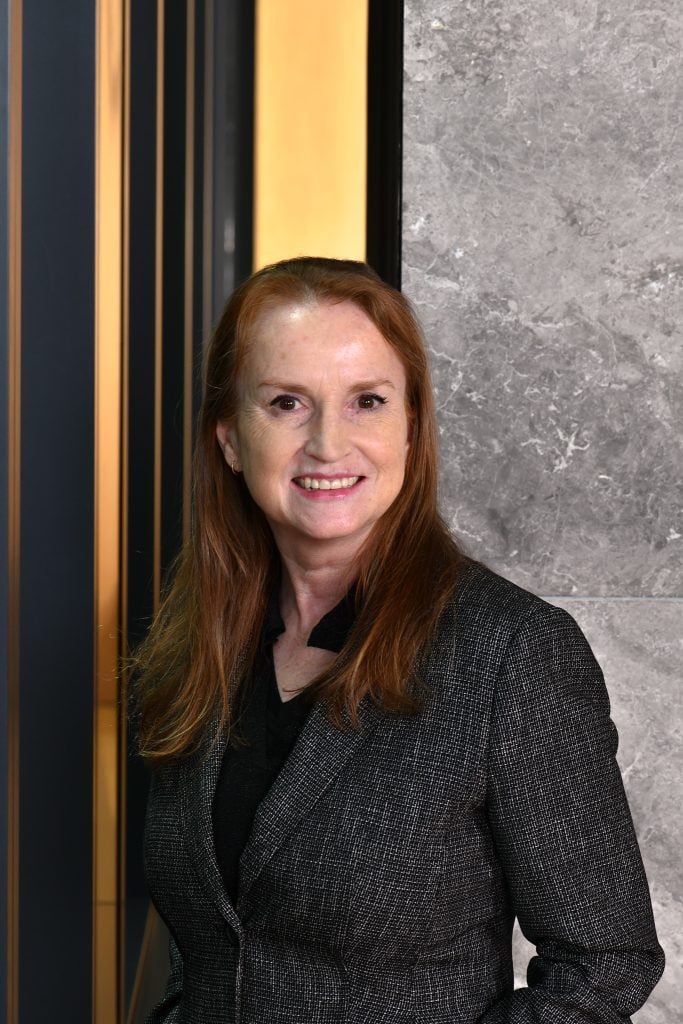
In CRADLE’s September seminar, we were delighted to have Associate Professor Juan Fraile deliver a presentation titled “Designing self-assessment students can actually use: Feedback, retrieval practices and self-regulated learning”. Juan is visiting CRADLE from the Universidad Francisco de Vitoria in Spain. In this seminar, he demonstrated a pedagogical design that integrated self-assessment into scaffolded retrieval practice and worked examples.

From the start, Juan introduced us to the concept of retrieval practice, vividly illustrated with examples of recalling textbook content for exam preparation and map-guessing. Retrieval practice provides opportunities to actively retrieve from memory what has been learnt. But “how do we know what we know”? Self-assessment therefore serves as the bridge between retrieval practice and self-regulation, as Juan suggested.
(Photo by Siham AbuKhalaf)
Juan presented a scaffolded approach to problem-solving that combines worked examples and retrieval practice with opportunities for self-assessment. Drawing on the concept of worked examples, students are first supported in understanding how a problem can be broken down in a sequence of steps and how these steps constitute a complete solution. The procedure includes:
1) presenting the problem
2) asking students to retrieve or predict the next step
3) revealing and explaining the next step
4) asking students to solve the step and submit the answer they consider correct
5) providing the correct answer with explanatory feedback
6) proceeding to the next step and repeating until the full solution is completed
This scaffolded design creates opportunities for students to self-assess their understanding, compare their response with an appropriate standard, and use feedback to calibrate their own judgement. This approach can be facilitated by digital platforms with real-time information about student responses and participation.
As an additional learning activity, students can also create their own questions or problems based on what they have learnt, which can be imported into digital learning platforms and used as classroom activities. At the end of the procedure, structured reflection is recommended for both students and teachers to improve students’ self-regulated learning and inform future teaching decisions.

The seminar attracted a lot of interest from both online and in-person participants. Questions were raised regarding student engagement, alternative approaches to asynchronous delivery, diverse student cohorts, variation in class size, use of chatbots, and many more. The interactive Q&A section led us to reflect on how the holistic design could be potentially tailored and applied to diverse educational contexts. The seminar ended with a compelling question for open debate:
“How much structure should we provide, and how much agency should students have?”
My key takeaway
Juan’s approach illustrates how research findings can inform educational design to embed self-assessment into the learning process, rather than as a final judgement. Where possible, educators may consider structuring feedback loops into pedagogical activities, in which students can access information to evaluate their learning and use it in a following task.
It is important to scaffold students to enact self-assessment through the educational design; however, context and student agency also matter. As assessment and feedback design is a complex decision-making process, we also need to take into account how different contextual elements (i.e. discipline, student characteristics, delivery mode, course content) may play a role in shaping its arrangement and implementation. Equally important, students’ active role should be recognised and properly supported in the feedback process.
Missed the seminar? Catch up on our YouTube channel!
About Kaiyu
Kaiyu is a PhD student at CRADLE and the Centre for Global Learning (GLEA) of Coventry University (UK), and was awarded a Deakin-Coventry Cotutelle Scholarship. Her doctoral project seeks to explore how peer feedback in group assignments may influence student performance. Kaiyu is interested in exploring the role of peer feedback and group work in enhancing student performance and developing transferrable skills for the future workplace.
Beyond Grades
Don’t miss your chance to join our expert panel – this Wednesday 14 October

CRADLE Seminar Series #8
Wednesday 14 October at 2.30pm
Discover more from CRADLE Blog
Subscribe to get the latest posts sent to your email.